
About Us
We have a keen interest in health and care deeply about what we put in and on our bodies. We avoid eating seed oils as much as possible and don’t want to coat our skin in them either.
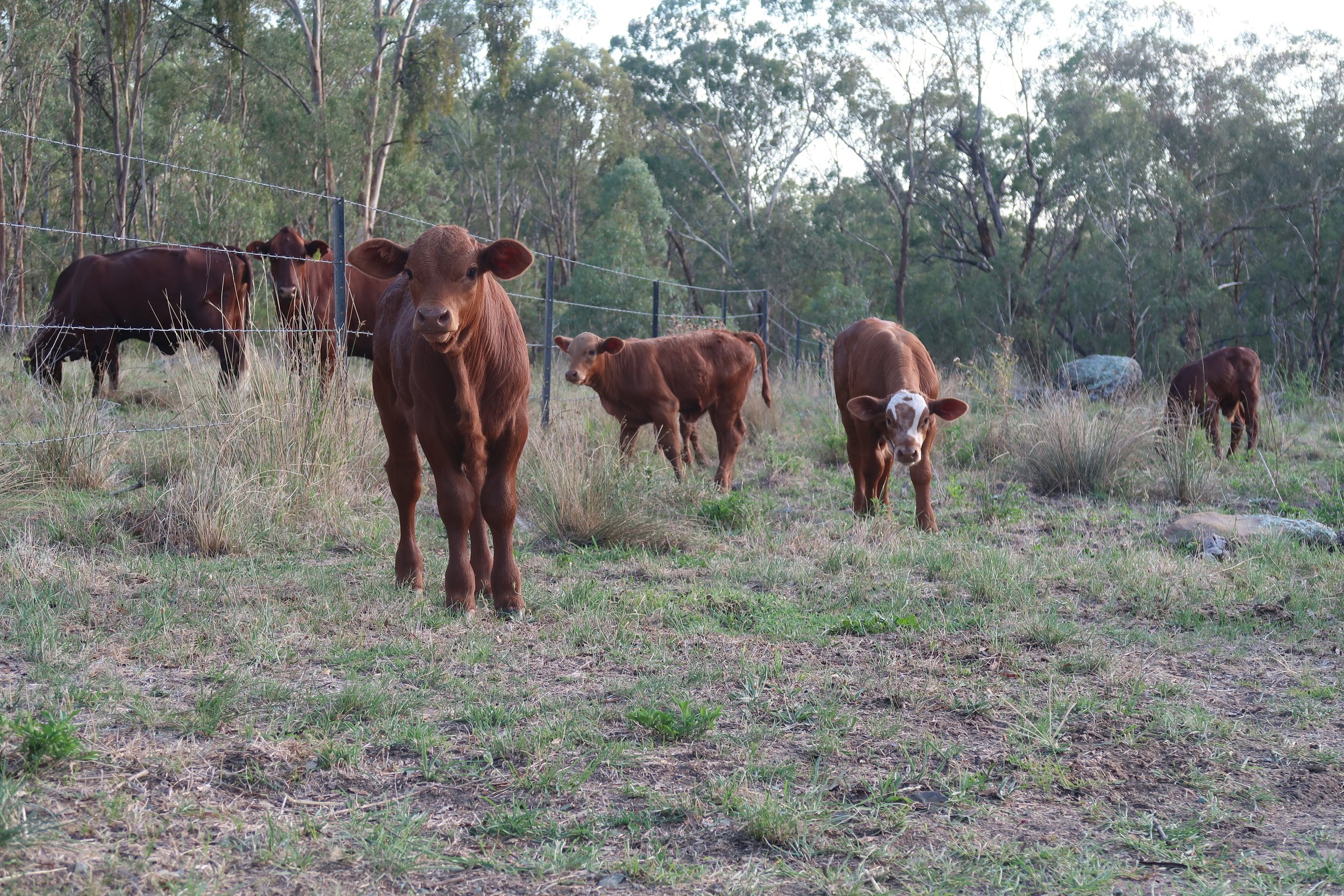
It is very important to us that the way our main ingredient “tallow“ is produced matches our values. Our tallow is sourced from cows that live the good life; roaming on a ethical, regenerative farm (no antibiotics, no hormones etc) in the Hunter Valley NSW and who live on a diet of grass, grass and more grass, commonly know as grass-fed & finished. We know the farmer and it is important that their values match ours.
We have formulated our moisturiser taking into consideration not only seed oils but compounds that can cause skin to become photo-sensitive too.
We present our formulation in amber glass jars because we are keen to limit the exposure of our moisturiser to micro-plastics.
It is important to us to use products that actually work. Our experience is that this moisturiser is the best moisturiser that we have ever used. The ingredients combined feel so good on your skin and people love the natural scent too; both men and women have raved about it.
It goes without saying, our tallow moisturiser is made in Australia.
Review the research on each ingredient that we have conducted to create our trade secret formulation here.
Our Team

Bijou Rennie
Co-Founder Since studying a Diploma in Health Science (Naturopathy) and working on a regenerative farm, I’ve learned just how powerful real ingredients are for our wellbeing and livelihood.
That’s exactly why I love our tallow moisturiser. It feels so nourishing and clean, it sinks in beautifully, leaves my skin soft and healthy all day, and has become my most used product.
Whether I’m out on the road or at home, my skin feels comfortable and well looked after. It’s honestly one of the best things I’ve discovered on my natural health journey.

Anne Rennie
A passion for health and a love of coffee! My weakness!
I love our tallow moisturiser because it keeps my skin moisturised all day and is the perfect primer under make up.
I have a lazy girl skin care routine, which consists of tallow as a cleanser and tallow as a moisturiser and primer!
So good!
I have been moisturising my skin since I was 10 years old. With over 40 years experience moisturising my skin, tallow moisturiser is clearly the best I have used.
Co-Founderhistory of tallow
Tallow has a rich, millennia-spanning history as a foundational ingredient in skincare, valued for its moisturizing, protective, and healing properties.
Ancient Egypt (~1550 BCE)
The Ebers Papyrus, one of the oldest preserved medical documents, frequently mentions animal fats and greases (including ox fat, goose fat, and other rendered fats) in ointments for skin conditions, wounds, and moisturising. These fats served as bases to carry herbs and minerals, creating protective and healing salves; very similar to how we infuse our tallow today.
Reference
Papyrus Ebers English excerpts](https://sae.saw-leipzig.de/en/documents/papyrus-ebers
Mesopotamia & Early Civilisations
Archaeological finds and cuneiform texts show animal fats were used in balms and ointments for skin protection and healing in ancient Mesopotamia. Residue analysis of containers confirms the use of rendered fats in cosmetic and medicinal preparations.
Classical Rome (1st Century CE)
Pliny the Elder, in his monumental Natural History, directly references hog’s lard and beef suet (tallow) for treating dry skin, rashes, scars, and skin irritation. He describes mixing these fats with other ingredients to restore skin colour and soothe ailments.
Reference
Loeb Classical Library excerpts (https://www.loebclassics.com/view/pliny_elder-natural_history/1938/pb_LCL418.99.xml
Medieval & Colonial Eras
European household manuscripts and herbal documents tallow as a common base for herbal salves infused with garden plants (calendula, comfrey, etc.) for chapped skin, wounds, and winter protection. Colonial and pioneer women continued this practice, rendering tallow at home for family skincare.
Archaeological Confirmation
Residue analysis of ancient Egyptian mummies and containers shows animal fats (palmitic and stearic acids typical of tallow) used in hair and skin preparations.
A remarkable 2,700-year-old Chinese face cream (Spring & Autumn Period) was chemically confirmed to contain ruminant animal fat (likely beef) mixed with minerals, one of the earliest laboratory verified cosmetic creams.
Reference
History of Natural Ingredients in Cosmetics https://www.mdpi.com/2079-9284/10/3/71
